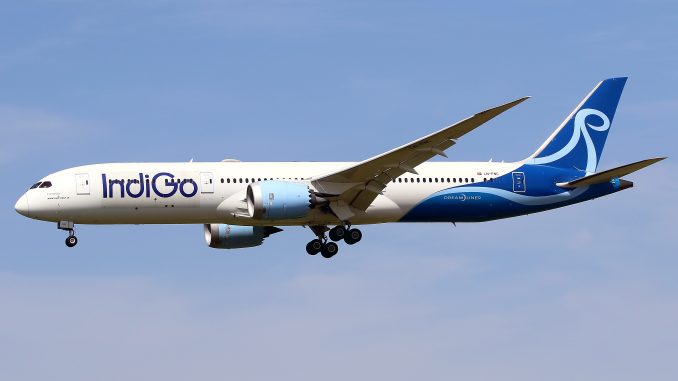
IndiGo will cease widebody operations at the end of October after agreeing to end its aircraft leasing agreement with Norse Atlantic Airways.
The Indian carrier will conclude the agreement on October 31, with the five remaining Boeing 787-9 Dreamliners being returned to Norse on November 1. A sixth Dreamliner is already due to be handed back on August 31 following IndiGo’s decision to close its Manchester service.
The move will see IndiGo’s Mumbai-Amsterdam route transferred to the Airbus A321XLR from October 25, while its services to and from London/Heathrow will be temporarily suspended until the arrival of its own Airbus A350-900s – not thought to be expected until 2028.
In a statement, Norse said the pair had discussed the ACMI agreement and “mutually agreed to discontinue the arrangement due to the continued geopolitical challenges affecting the airline industry and long-haul operations between India and Europe.”
Abhijit Dasgupta, SVP planning and revenue management at Indigo, said: “We extend our appreciation to Norse Atlantic Airways for its valued partnership and professional services; and to our customers, employees and partners whose trust, commitment and support have been central to this journey.”
The carrier began operating its first Norse 787-9 in March 2025, initially deploying the aircraft between Delhi and Bangkok. The arrangement was subsequently expanded to six aircraft, supporting IndiGo’s introduction of long-haul services between India and Europe.
IndiGo has 60 A350-900s on firm order after converting purchase rights for an additional 30 aircraft in October 2025. The airline retains purchase rights for a further 40 A350 Family jets.
The announcement of an end to widebody operations comes as Willie Walsh, the outgoing director-general of IATA, prepares to take up the reins of IndiGo as CEO tomorrow (August 1).
The news of an end to Norse’s leasing agreement with IndiGo comes after the Norwegian carrier embarked on a round of cost cutting exercises. Dubbed Project Falcon, the plan is hoped to deliver annual savings of up to $50bn compared with its 2025 cost base. The measures are designed to simplify the business, reduce overheads and improve flexibility as the carrier works towards sustainable profitability.