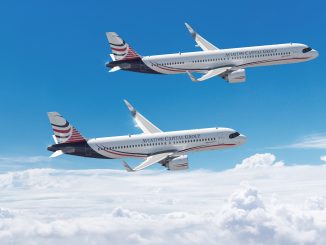
Airbus sees little commercial justification for developing a further stretched version of the A321neo, despite acknowledging that the aircraft has some potential for additional growth.
Speaking at the manufacturer’s commercial aircraft media briefings in Toulouse on October 13, Christoph Zammert, head of the A320 Family programme, said Airbus had examined the possibility of enlarging its best-selling narrowbody but concluded that the investment would be difficult to justify.
“Obviously, in theory, the aircraft still has some potential to be stretched. We looked into it, but we don’t see a market or financial viability for that,” he said.
Zammert explained that a further stretch could encounter difficulties associated with the A320 Family’s original certification basis. Successive developments have benefited from grandfathering provisions, allowing aspects of the original design to retain compliance with earlier certification standards.
However, he suggested that another substantial modification could test the limits of those provisions, potentially requiring investment so significant that developing an entirely new aircraft would make greater financial sense.
Airbus has not completely closed the door on the possibility, with Zammert adding: “If a customer wants it, we could consider it.”
For now, the manufacturer’s focus remains on improving the existing family and increasing production to meet demand. The A321neo accounts for approximately three-quarters of the A320 Family’s outstanding orders, with customers increasingly opting for the larger aircraft over the A320neo.
Airbus is also introducing further improvements to the family, including plans to incorporate elements of the A321XLR’s wing design, such as its single-slotted flaps, across other variants.
However, Zammert stressed that these modifications should not be interpreted as preparations for another fuselage stretch.
Despite the manufacturer’s plans to develop an entirely new generation of single-aisle aircraft, Zammert indicated that the existing A320 Family still has several decades ahead of it.
“We expect to still be delivering aircraft in the 2040s,” he said. “It’s going to be with us for a large part of the century.”
The comments suggest that production of the existing narrowbody family could continue alongside its eventual successor, which Airbus is targeting for launch around 2030 and entry into service towards the end of the following decade.
Airbus Commercial Aircraft CEO Lars Wagner reaffirmed the proposed timetable during the Toulouse briefings, outlining plans for an aircraft incorporating advances in propulsion, aerodynamics and digital systems.
The manufacturer is also studying a stretched version of the smaller A220, provisionally designated the A220-500, which would extend that family into the market currently served by the A320neo.